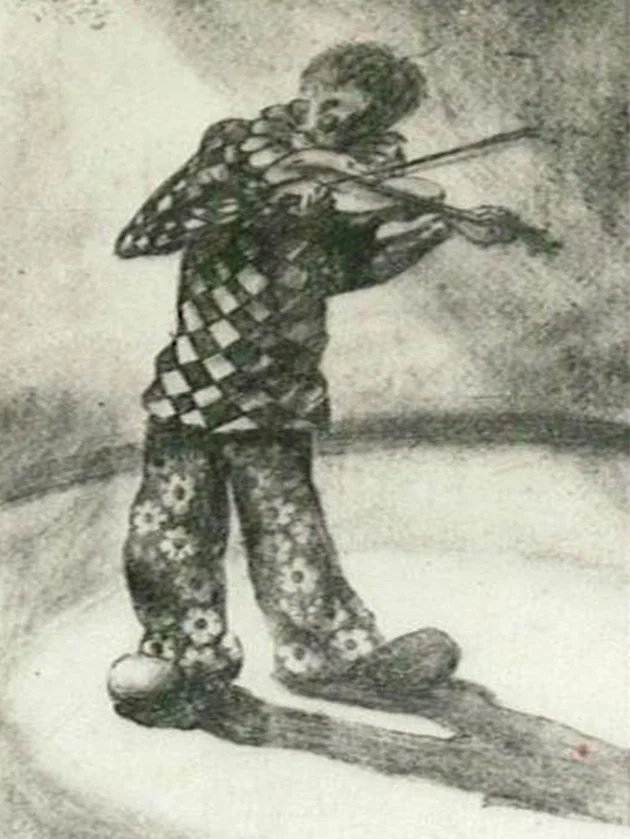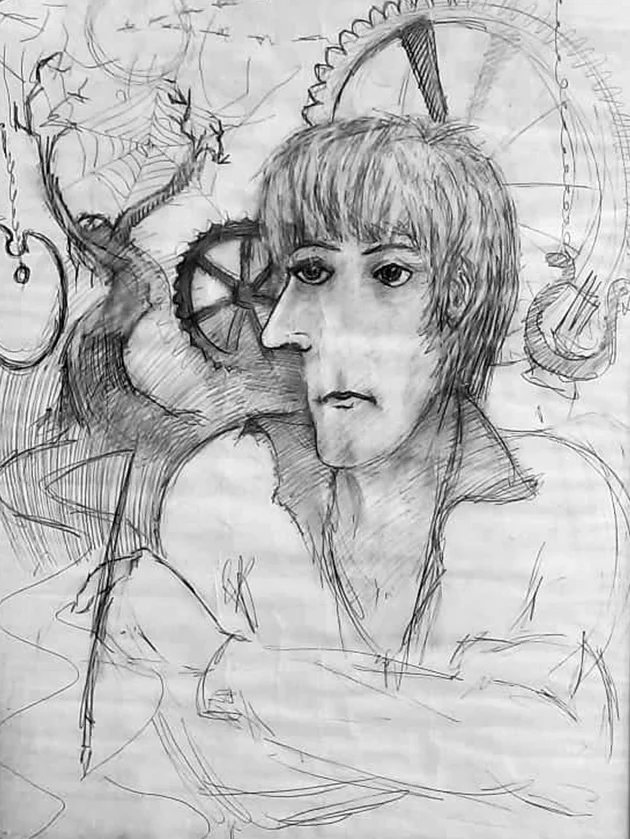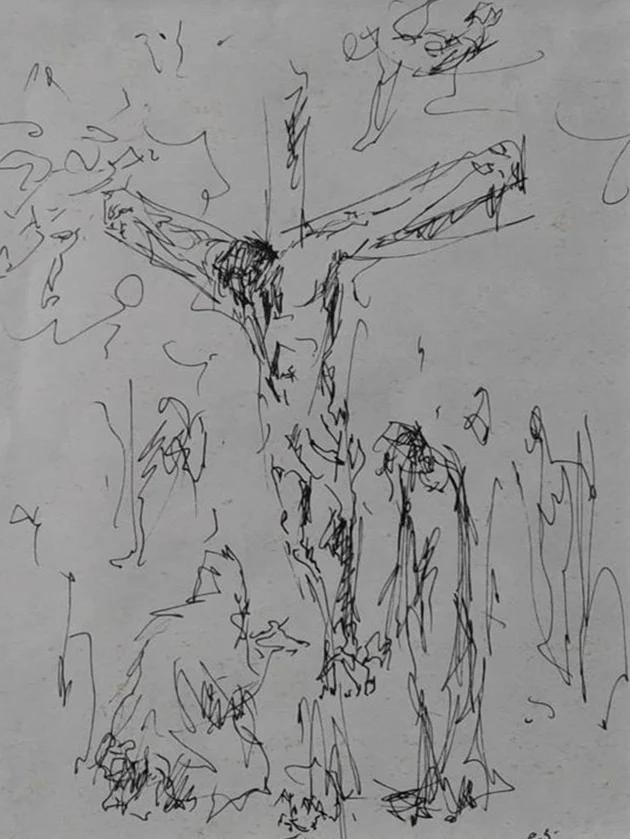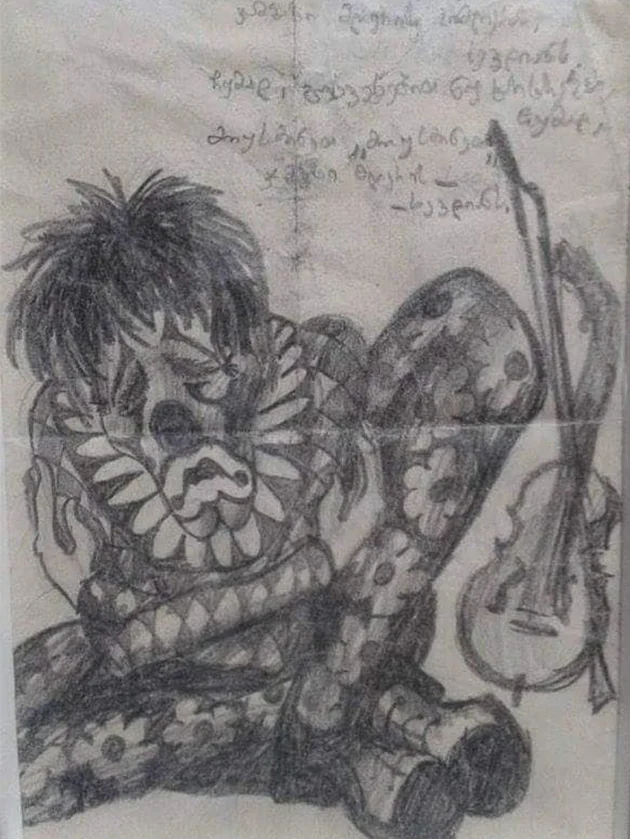


He was called a “little genius.” He wrote, painted, and sang. Sadly, his life ended very early, at the age of 17. Dato seemed to have sensed his own departure:
“On the day of my funeral, it will rain,
The raindrops will mourn for me too,
They will lay me to rest beyond Tbilisi,
And perhaps, they will forget me forever”…
Dato Kratsashvili was born in Tbilisi on 9 July 1963. His father, musician and journalist Giorgi Kratsashvili, was a native of Nukriani village in Sighnaghi Municipality.
Dato studied at the 31st Art School. He graduated from the Second Experimental School in Tbilisi and from the Musical Ten-Year School affiliated with the Vano Sarajishvili Tbilisi State Conservatoire, specializing in piano. That same year, he enrolled in the Painting Department of the Iakob Nikoladze Tbilisi Art College, although he only had time to complete two years of study.
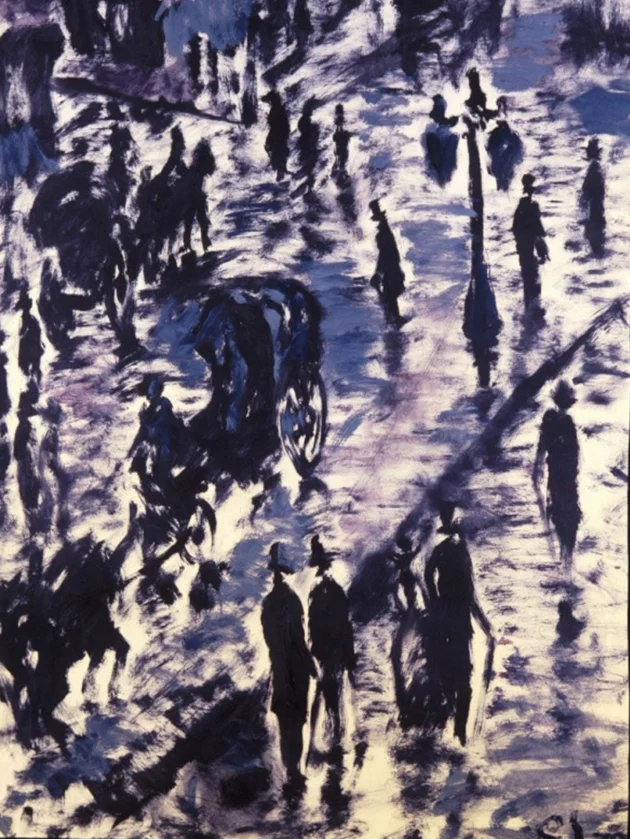
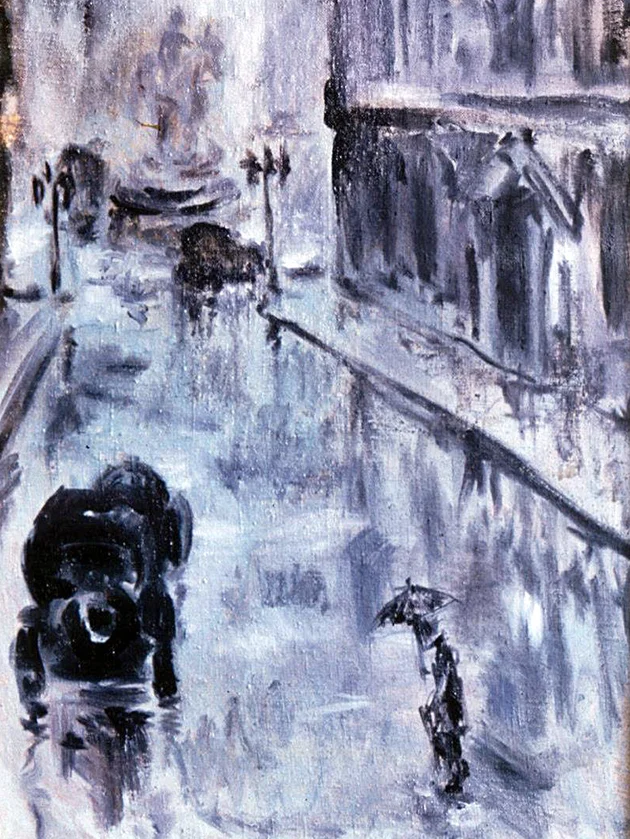
In 1979, at an exhibition of non-course works held at the House of Art Workers in Tbilisi, Dato was awarded a certificate and the “Venus” prize for the best composition, “Rainy Day.” This was his first and only recognition during his lifetime.
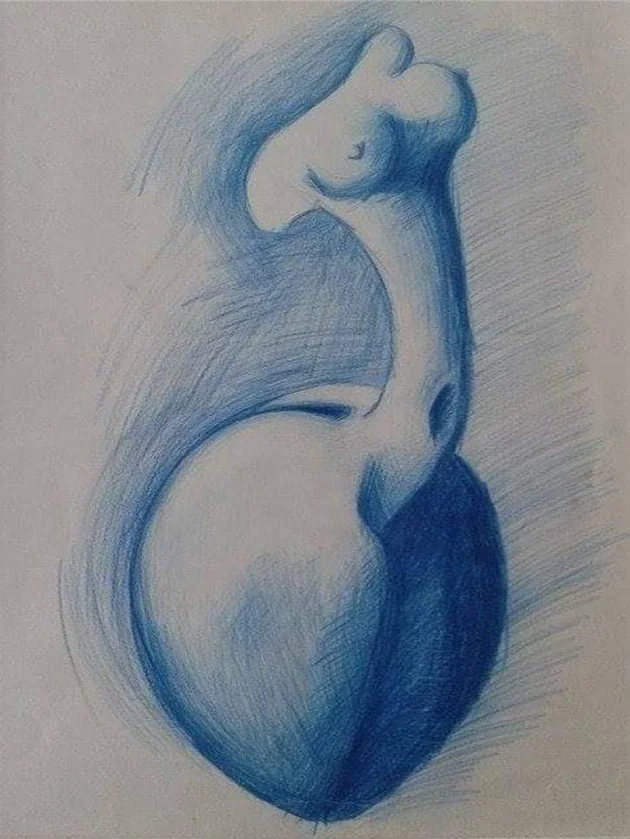
Dato’s work is marked by a bright and deeply moving melancholy. Among his works are “The Circle of Life,” “Storm in the West,” “Galaktion,” “Baratashvili,” “Beethoven,” “The Beggar,” “Man and the Universe,” “Genesis,” and others.
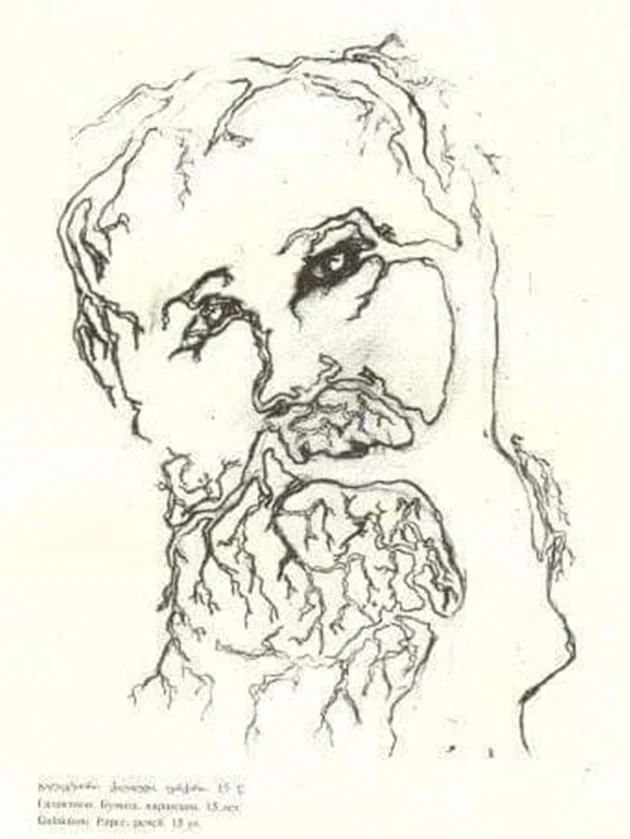
Galaktioni
Dato Kratsashvili left approximately 1,000 paintings and graphic works, 35 poems, and around 10 diaries. Unfortunately, his musical improvisations have not survived, as he never transcribed them into musical notation.
Dato Kratsashvili’s free-form essays on Georgian literature, “My Friend” and “Who Am I?”, have survived. In one of them, he writes about himself: “And yet, who am I now? A person who has laws created only for himself.” The text reveals his attitude toward people, studying, friendship, and his own desires. He also notes that he was born with a “talent for painting and writing,” and that for this reason he was often asked to design wall newspapers and albums at school.
Dato Kratsashvili died on 13 July 1980 from complications following surgery, on the fifteenth day after an operation for a duodenal ulcer.
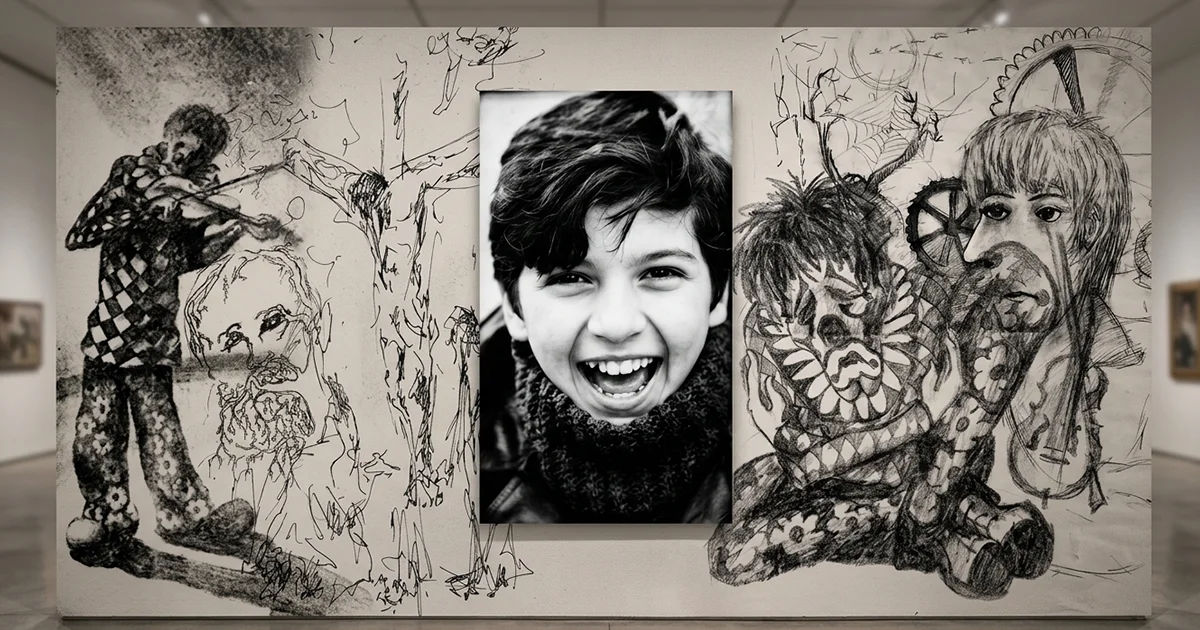
His first solo exhibition was held after his death, in 1981, at the “Pirosmani” exhibition hall of the Youth City in Shavnabada. This was followed by solo and group exhibitions in various cities in Georgia and abroad — in Tbilisi, Kutaisi, Sighnaghi, Moscow, St. Petersburg, and Bulgaria.
In 1982, his works were exhibited at the exhibition hall of the “Tbilisi” cinema in Moscow and at the Elene Akhvlediani Children’s Art Gallery in Tbilisi. In 1983, an exhibition of his works was held in St. Petersburg, while in 1985, 20 of his works were exhibited in Moscow at the 12th World Festival of Students and Youth. In 1988, Dato’s works were presented in Bulgaria at the international festival “Banner of Peace.”
In 2007, 72 of Dato Kratsashvili’s paintings were exhibited at the TBC Bank exhibition hall, while in 2009, 65 of his works were presented at the Sighnaghi Historical-Ethnographic Museum. In 2022, the exhibition “Time,” dedicated to Dato Kratsashvili, was held at the National Gallery of Georgia.
Numerous television and radio programs and newspaper articles have been dedicated to Dato Kratsashvili’s work.
In 1988, the Smithsonian International Astronomical Center of the United States named the planet known as No. 3146 “Dato” after him. American art historian Max Gaitor wrote about Dato’s creative talent: “This boy was a genius, and we should thank God that Dato left us a part of his genius to inspire our admiration.”
On 11 March 1985, an evening was held in memory of five talented artists who had died prematurely: Jilda Datuashvili, Dato Kratsashvili, Vladimir Machaidze, Jemal Topuria, and Nugzar Machavariani.
Despite his short life, Dato Kratsashvili left behind a significant creative legacy — paintings and graphic works, poems, and diaries that continue to preserve traces of his exceptional talent and his unique vision of the world.