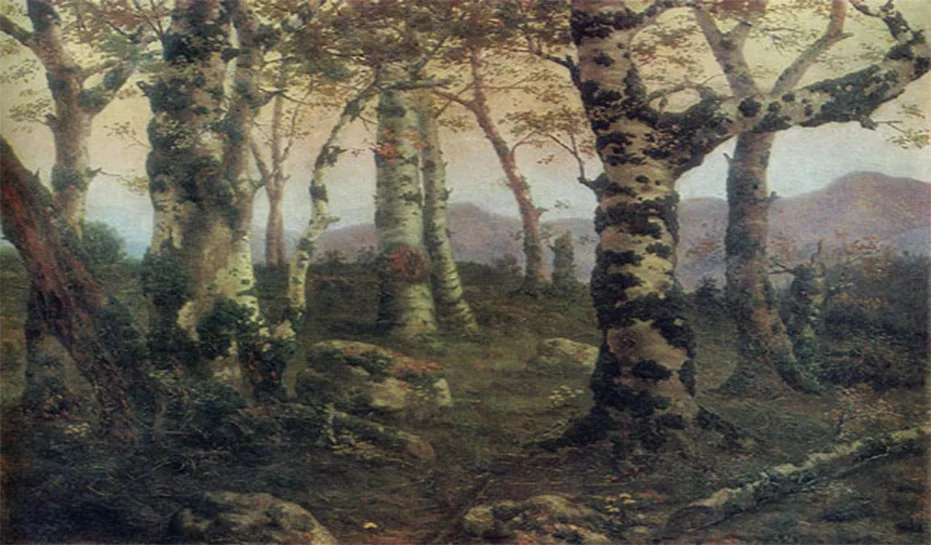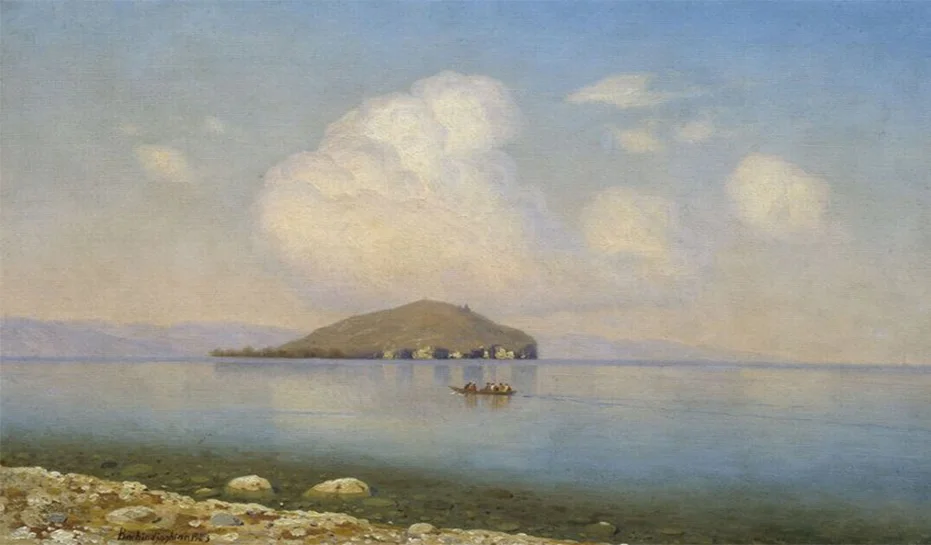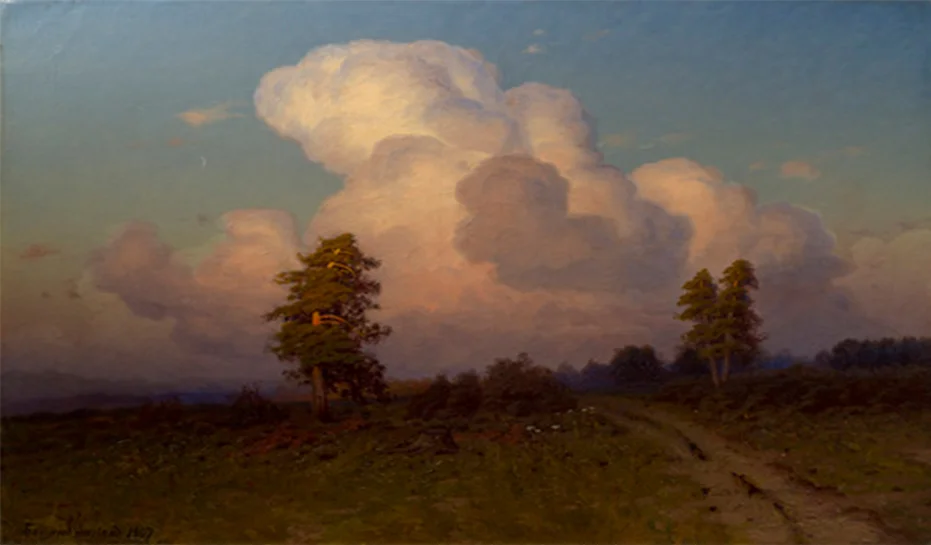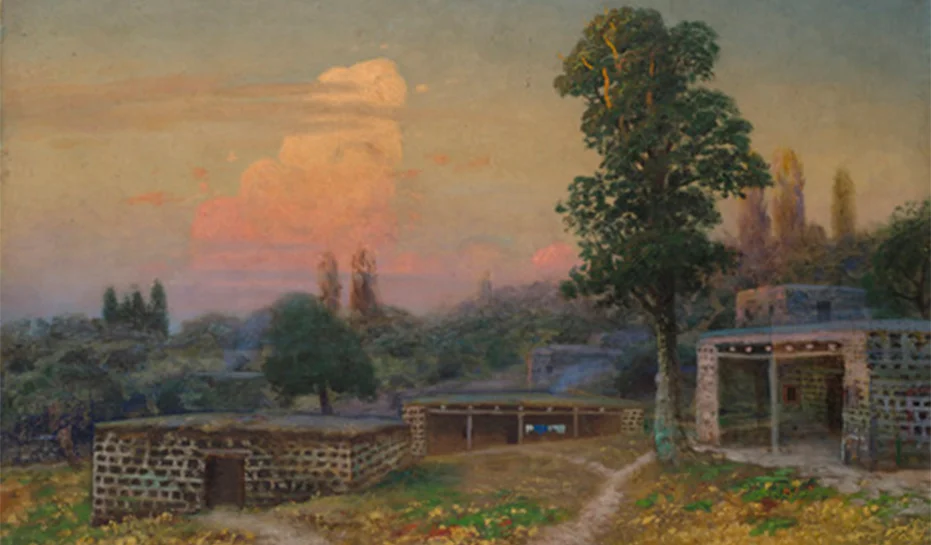


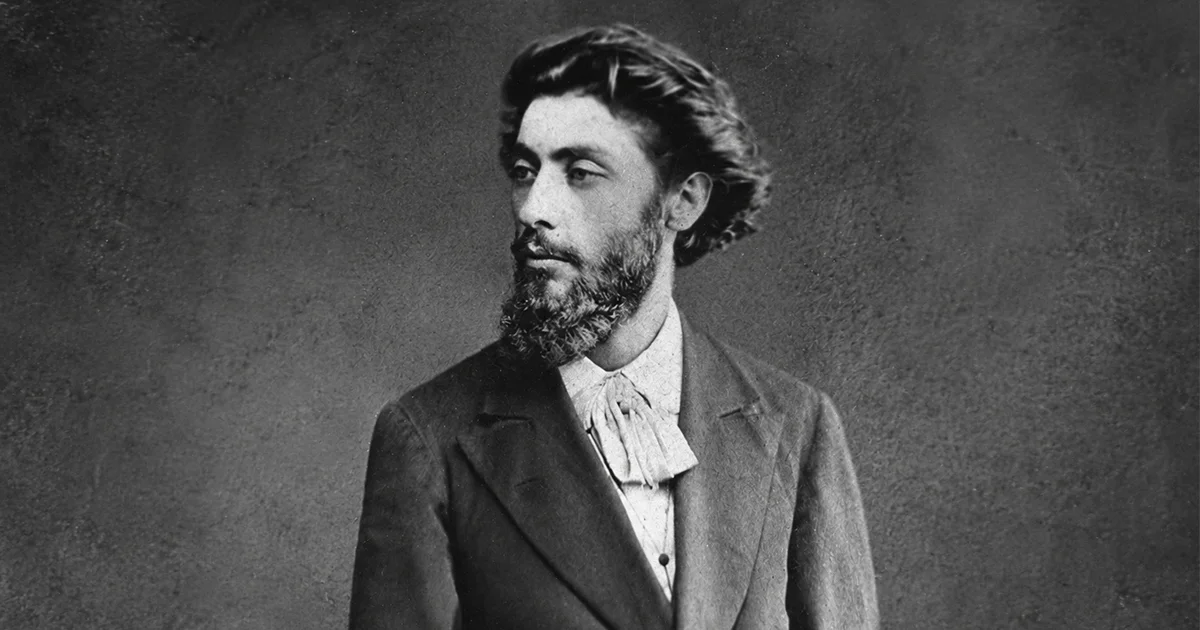
Sighnaghi has been the birthplace and starting point of the creative journey of many interesting people. Among them, a special place is held by Gevorg (Giorgi) Zakarian Bashinjaghian, an Armenian painter and landscape artist whose work was deeply influenced by the nature of the Caucasus.
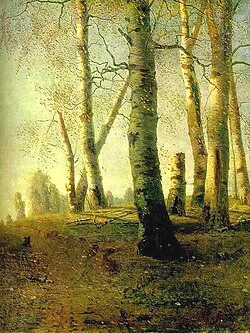
Bashinjaghian was born in Sighnaghi on 16 September 1857. He began his artistic education in Tbilisi and later continued his studies at the Imperial Academy of Arts in St. Petersburg, where he studied under Mikhail Klodt. Upon completing his studies at the Academy, he received a silver medal for his work “Birch Grove.”
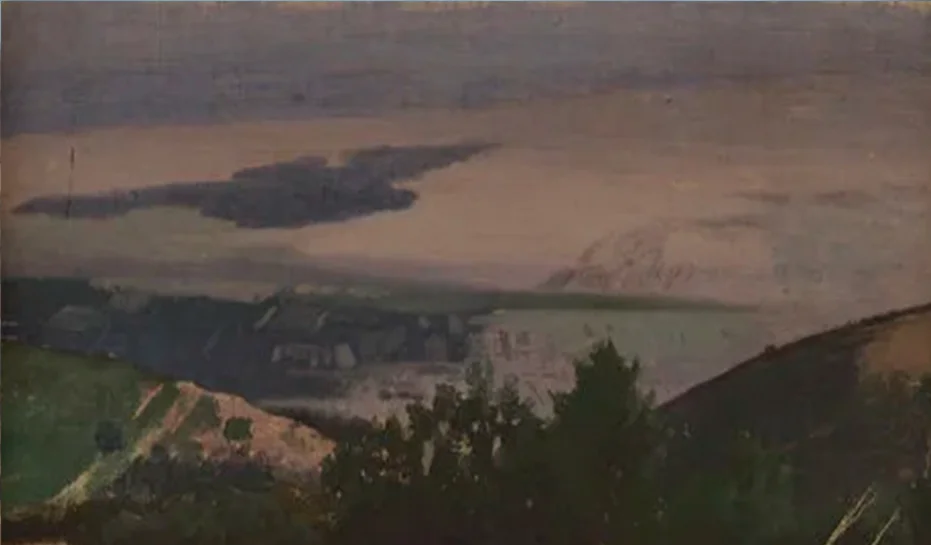
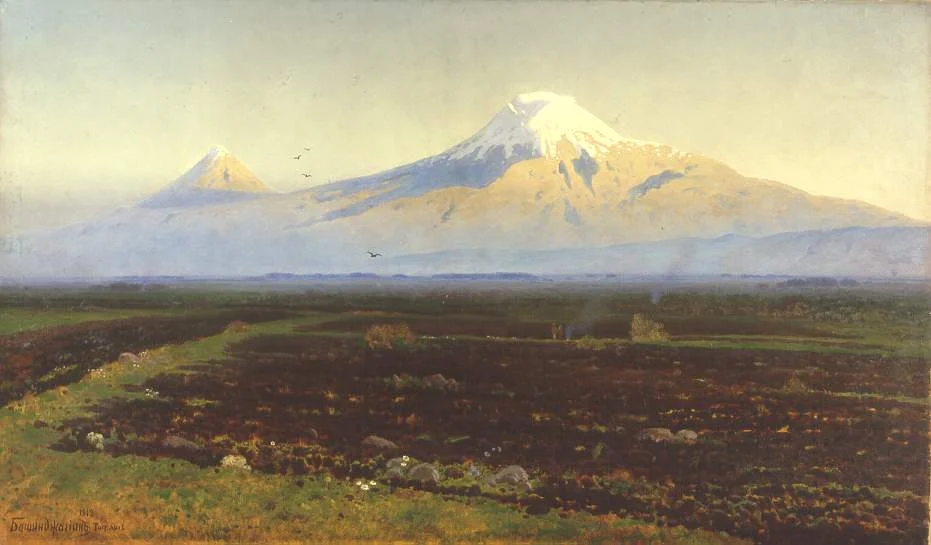
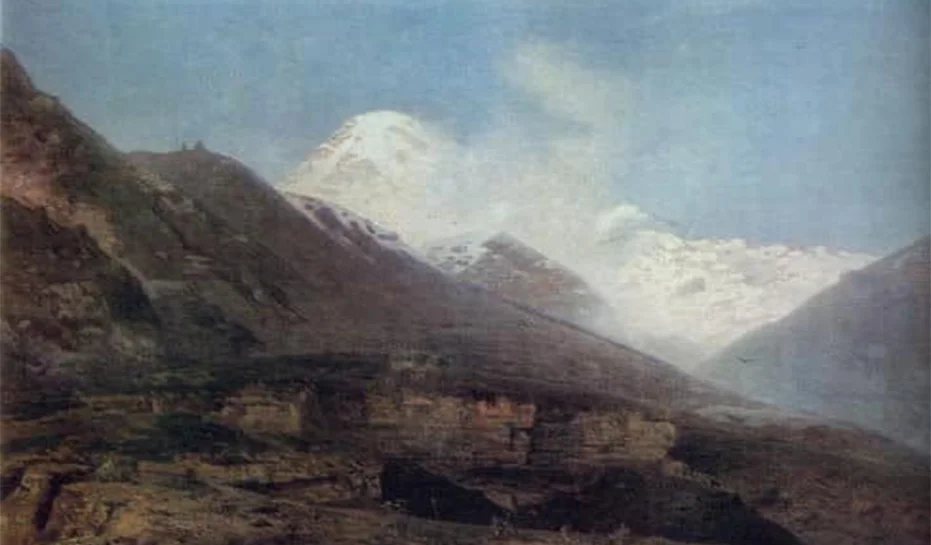
After completing his education, Bashinjaghian began travelling to different parts of the Caucasus. He painted Lake Sevan, Mount Ararat, Mount Kazbek, the Darial Gorge, the Alazani Valley, Ani, and other locations throughout the Caucasus. In addition to nature, he was also interested in the everyday lives of the people who lived there. These journeys shaped the main direction of his artistic work — landscape painting, in which, alongside the beauty of nature, the artist’s personal emotions could also be felt.
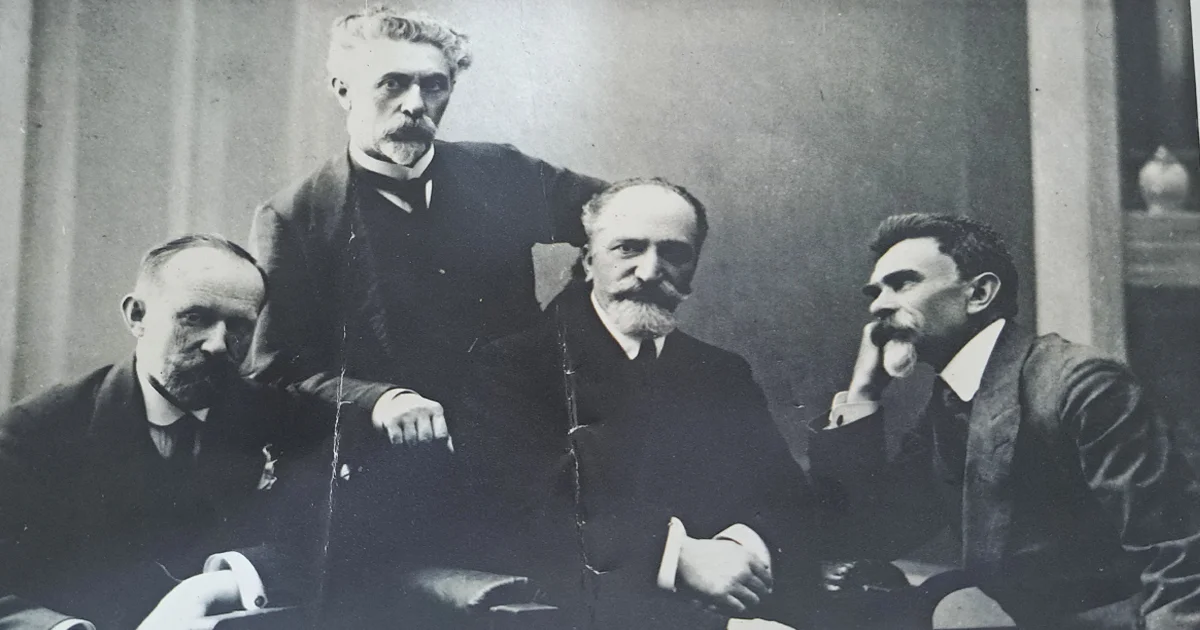
From left to right: Henrik Hriniavsky, painter Gevorg Bashinjaghian, musician Konstantine Alikhanov, painter Oscar Shmerling. Photo from the collection of Gia Gersamia. Teachers at the School of Painting and Sculpture, 1901.
The Caucasus held particular importance for Bashinjaghian. He was deeply impressed by the nature of both Armenia and Georgia. Some of his works also depict landscapes of Khevi, indicating that the artist visited this region on several occasions. Mountains, valleys, sky, water, and light in his paintings are not merely depictions of nature; they create a particular mood.
His artistic work was not limited to landscapes. Bashinjaghian had a particular interest in Georgian literature and created works based on motifs from Shota Rustaveli’s “The Knight in the Panther’s Skin.” The Georgian press of the late 19th century also wrote about this. For example, in March 1888, the newspaper “Iveria” reported that paintings by Bashinjaghian based on motifs from “The Knight in the Panther’s Skin” would be presented at a literary evening hosted by Vasil Abashidze. In June of the same year, “Mshak” reported on an exhibition and sale of his paintings in Baku.
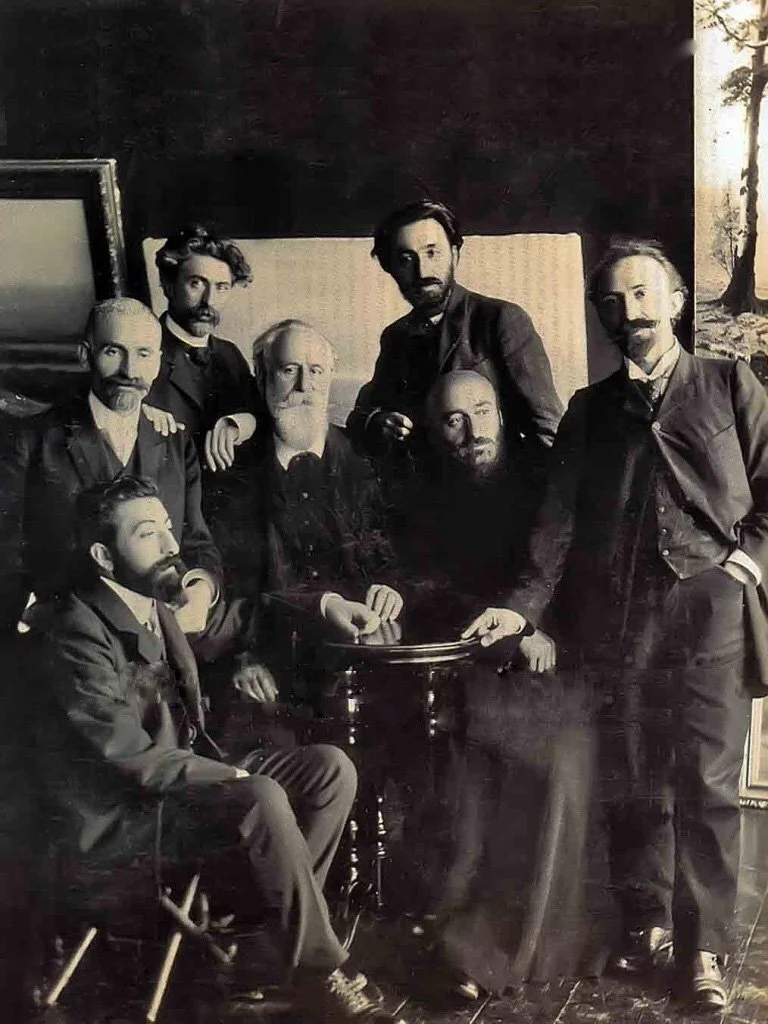
Photo: From left to right — Avetik Isahakyan, Hovhannes Tumanyan, Gevorg Bashinjaghian, Ghazaros Aghayan, Vardanes Papazian, Komitas, Arshak Chobanyan. The literary club “Vernatun.” Tbilisi, 1908.
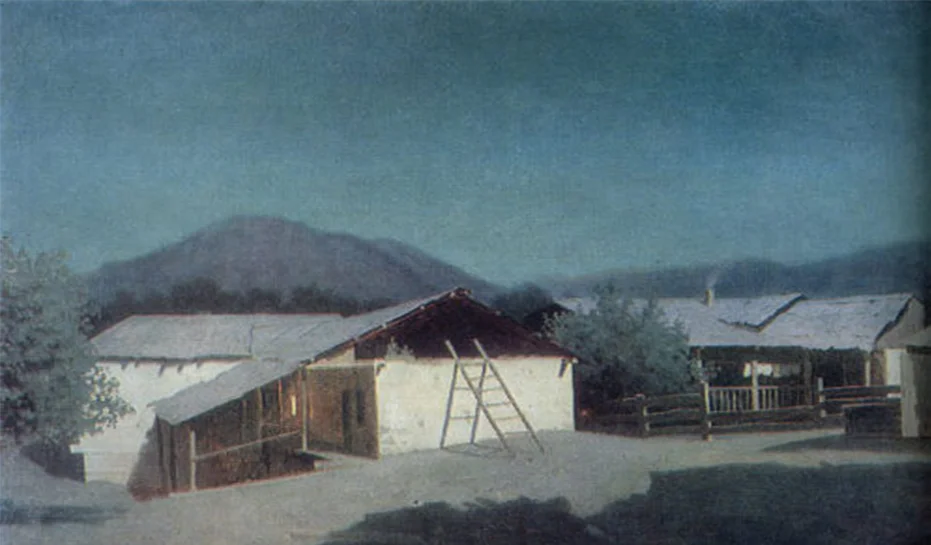
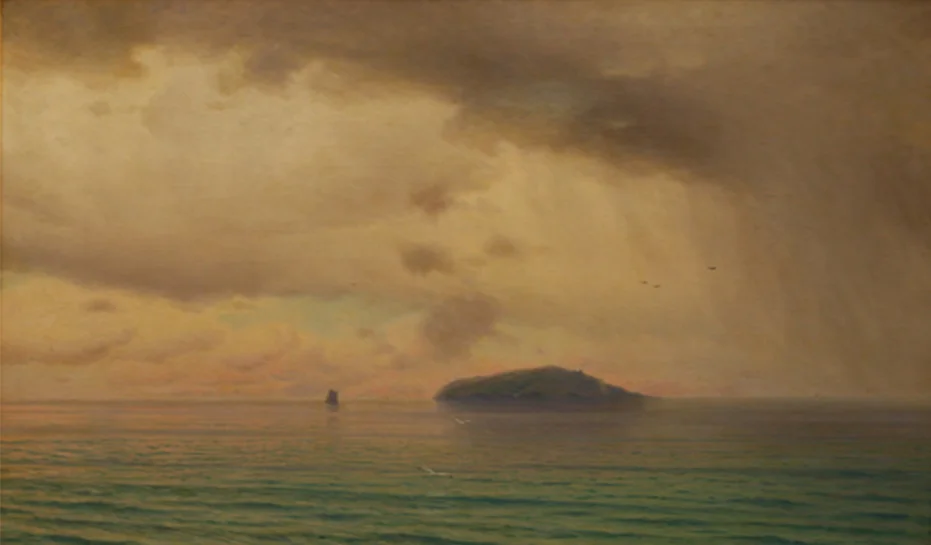
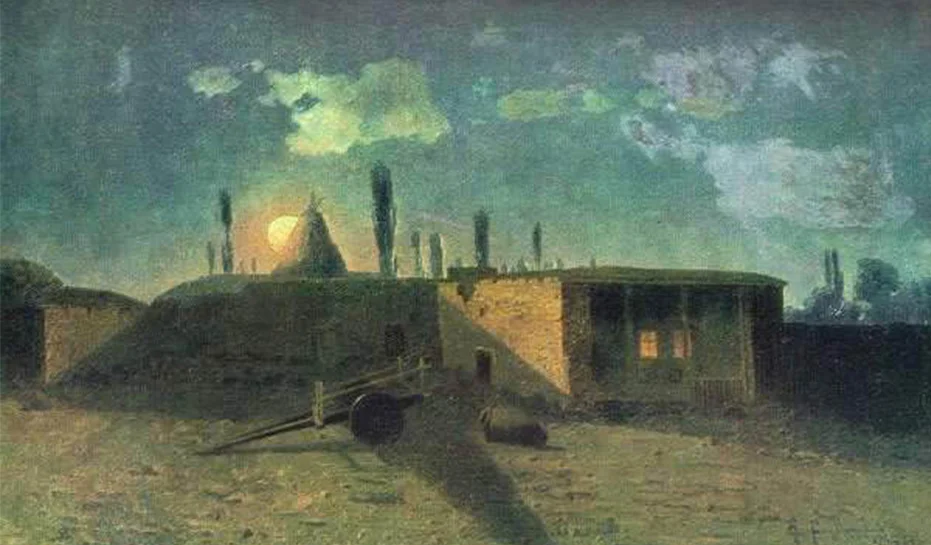
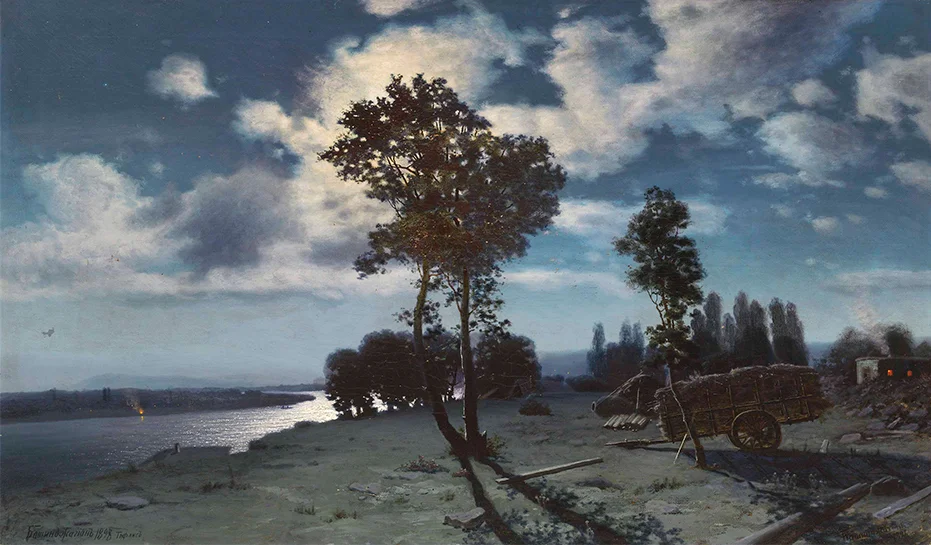
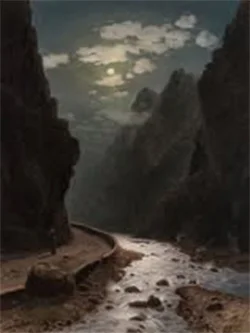
The particular charm of Bashinjaghian’s work lies in his tranquil and mysterious landscapes. He was not interested only in dramatic and stormy nature; he often depicted silence, nighttime illumination, moonlight, clouds, and light reflected on the surface of water. In works such as “Rainy Day on Lake Sevan,” “Night in Ortachala,” and “Darial Gorge at Night,” nature seems to transform into a living mood.
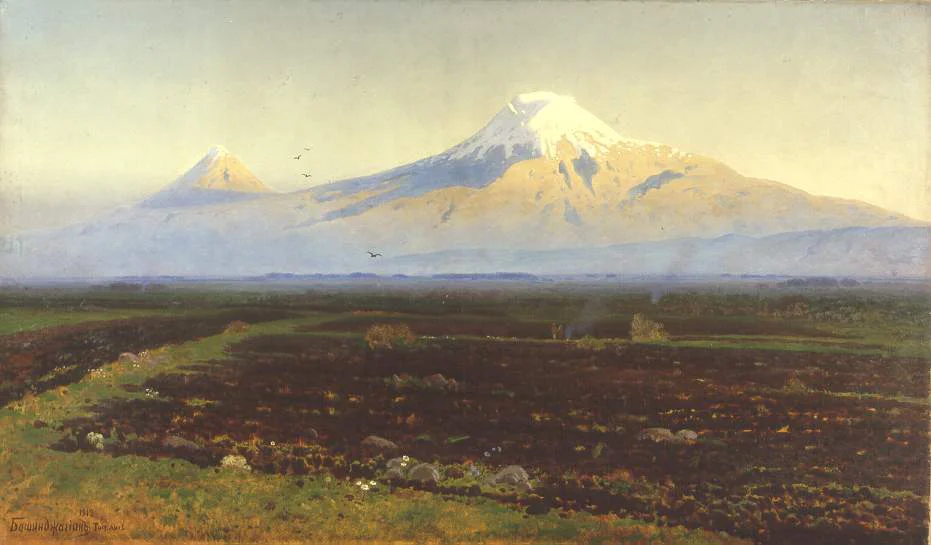
One of his best-known works is “Kazbek,” while among his important later works are “Alazani Valley” and “Ararat.” The image of Ararat became particularly significant in Bashinjaghian’s work. He painted the mountains of the Caucasus from nature and sought to convey in them not only their outward beauty but also his own feelings.
Becoming acquainted with European art also played an important role for the artist. He travelled to Italy and Switzerland and later spent several years in Paris. The experience he gained in Europe influenced his artistic vision, although the nature of the Caucasus remained central to Bashinjaghian’s work.
Bashinjaghian lived in Tbilisi for most of his life and travelled from there to different parts of the Caucasus. His works are now preserved in various museums and private collections, including art museums in Georgia and Armenia.
Gevorg Bashinjaghian died in Tbilisi on 4 October 1925. However, his work continues to remind us of an artist for whom the nature of the Caucasus was not simply a landscape to be painted, but a place whose beauty he expressed throughout his artistic career.
And one thing is especially important in this story: this artist was born in Sighnaghi — a city whose views, streets, and surroundings continue to inspire countless artists and travellers today.