


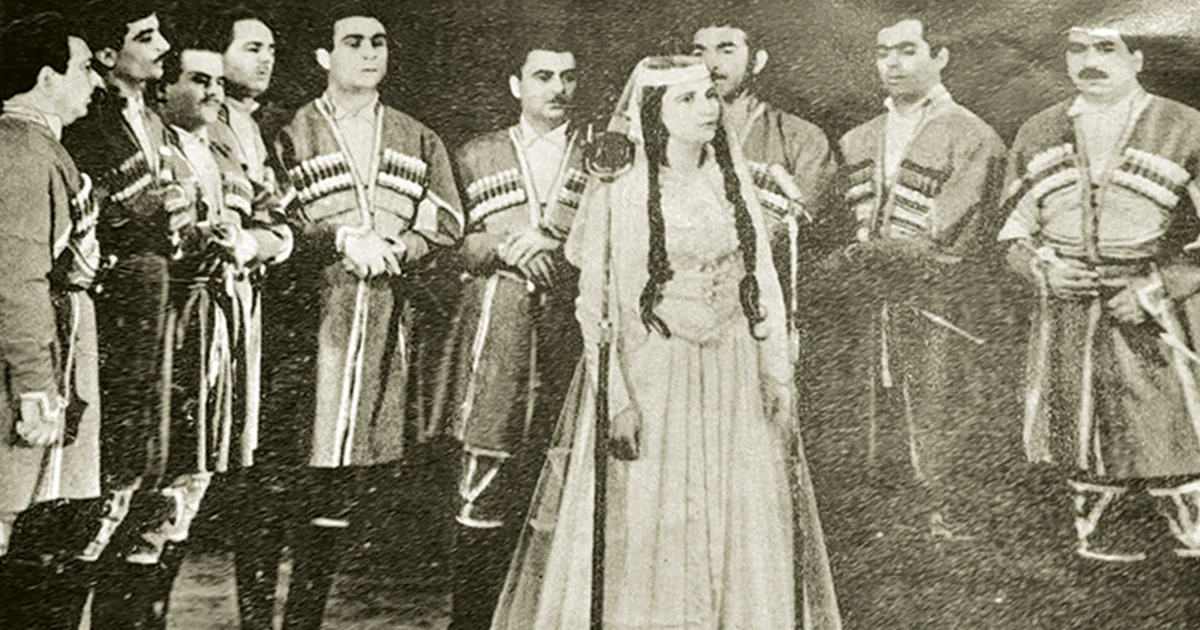
Sighnaghi is often referred to as the city of singers and musicians. This small town is associated with many distinguished artists, among whom Vara Chakhvashvili holds a special place — a woman from Sighnaghi whose remarkable voice and distinctive manner of performing folk songs are still remembered by listeners years later.
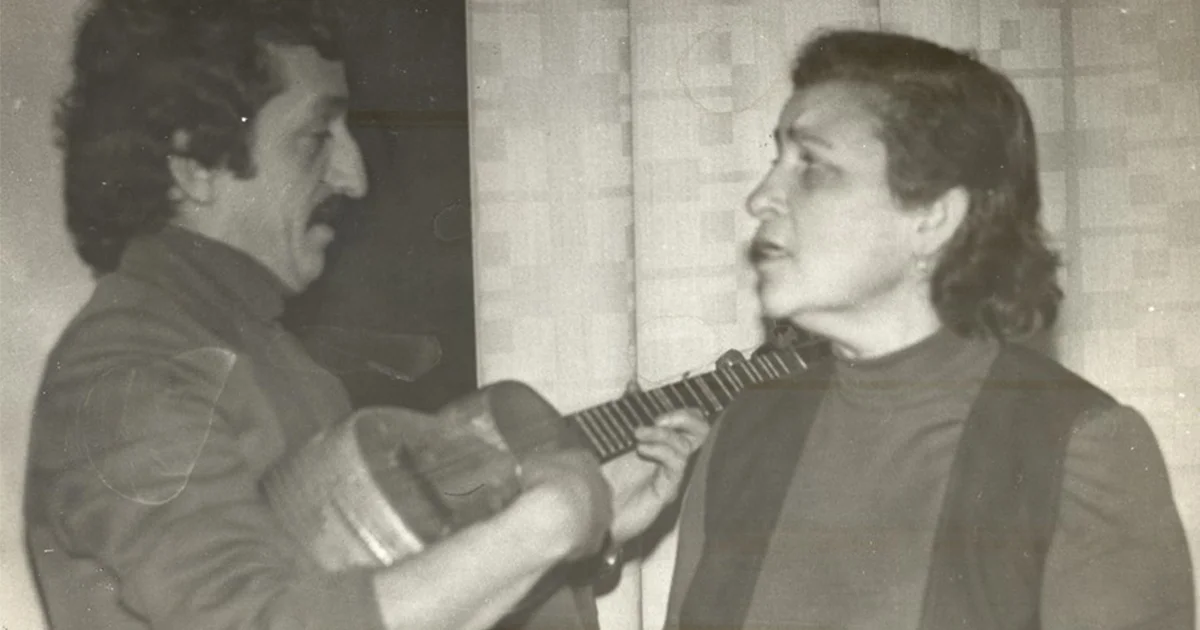
Vara Chakhvashvili was born in Sighnaghi into the family of Vano Kaitmazov, a well-known accordion player and shoemaker. Music was a part of everyday life in her family. Her father played the accordion, her grandmother played the daira, while Vara herself sang from childhood and also played the guitar. Small family “concerts” were often held at home: her grandmother played the daira, her father the accordion, Vara the guitar, and the children sang.
Vara Chakhvashvili did not receive a professional musical education. After finishing school, she completed accounting courses and began working first in the district cultural department and later as an accountant at the Sighnaghi Music School. Nevertheless, as soon as Vara began to sing, those listening to her would forget about her profession. Guests were often introduced to her as an accountant, but after hearing her voice, they were left amazed.
Her talent was particularly evident when performing folk songs. Vara had an exceptional, flexible voice that naturally handled the complex melismas and vocal transitions characteristic of folk singing. It was precisely this quality that made her singing so distinctive.
One of Vara Chakhvashvili’s best-known performances was Niko Sulkhanishvili’s “Daigvianes.” In 1964, she received a silver medal at the Republican Review of Amateur Folk Ensembles. She also sang in the Sighnaghi male folk song ensemble, led by choirmaster Vladimir Nanobashvili.
On 29 April 1967, at an event dedicated to the 80th anniversary of Sandro Akhmeteli, Vara Chakhvashvili performed two songs together with the Sighnaghi vocal group: “Mash Gaimarjveba, Tk bilo Sitsotskhlev” and Niko Sulkhanishvili’s “Daigvianes.” That same year, she participated in a competition dedicated to the 50th anniversary of the October Revolution, where she received a first-degree diploma.
In 1969, Vara Chakhvashvili was invited as a soloist to Otar Berdzenishvili’s vocal ensemble. In 1970, the Melodiya company recorded three songs performed by her on a gramophone record: “Nana,” “Daigvianes,” and “Orovela.” During the same period, Georgian Television recorded Vara Chakhvashvili performing “Daigvianes.”
Vara Chakhvashvili’s creative work extended beyond Sighnaghi. She participated in the Days of Georgian Culture held in Germany. Initially, singers were selected for the event, but Vara was not even invited to the selection process. Otar Taktakishvili had heard her sing at the anniversary event dedicated to Sandro Akhmeteli and believed that another audition was unnecessary. Vara was placed directly among the participants and travelled to the Georgian Culture Days in Germany together with Otar Berdzenishvili’s ensemble.
One of her performances in Germany was particularly successful. Vara recalled that as soon as she began singing, the audience in the hall fell silent, and after she finished, people stood up and applauded her for a long time. The German authorities offered her the opportunity to remain in the country and bring her family there as well, but Vara declined the offer. Georgia, Sighnaghi, and her own home were so important to her that she could not imagine leaving them.
Later, Vara Chakhvashvili was also offered the opportunity to move to the United States, but she declined this offer as well. As a member of her family recalls, Vara never sought wealth or fame. Her greatest wealth was singing.
Vara Chakhvashvili had creative relationships with many well-known Georgian artists. She was particularly close to composer Sandro Mirianashvili and performed his songs with great success. Vara Chakhvashvili also performed Mirianashvili’s “Sadghregrdzo,” and her performance was recorded on a record. Composer Bidzina Kvernadze was her classmate.
Her voice inspired many well-known people. The poet Giorgi Jangulashvili dedicated a poem to Vara Chakhvashvili, while Moris Potskhishvili referred to Vara in his own collection as “a siren with a Jangulian voice.”
Vara was particularly connected with the public celebration dedicated to Vano Sarajishvili held in Sighnaghi, known as “Vanoba.” During the celebration held in Sighnaghi in the last week of May, representatives of the musical world gathered, and Vara Chakhvashvili participated almost every year. It was at one of these celebrations that she first performed the song “Tu Ar Gინakhavs Sighnaghi, Dzveli Kalaki Mtazed,” based on a poem by Ioseb Noneshvili. Ioseb Noneshvili himself was also deeply impressed by her performance.
For Vara Chakhvashvili, singing was not only a part of the stage. She also sang in everyday life. She learned songs at home and then performed them while doing her daily activities: while cooking, washing, and working in the garden. She cultivated the land, cared for the vineyards, made wine, and even made shoes. Singing was an inseparable part of her life.
Another distinctive feature of her life was that Vara was very critical of her own singing. She believed that she became nervous on stage and sang more freely at home. She continued singing even in old age and, although she regretted no longer being able to use her voice as she once had, she never separated singing from her everyday life.
Vara Chakhvashvili’s special attitude toward folk singing was also evident in the way she approached it. At the table, she would begin singing only when she had partners for a polyphonic performance; as she herself said, “I cannot spoil a polyphonic song.” Her daughter’s friends especially loved singing together with Aunt Vara.
Although she had no musical education and did not know musical notation, Vara could tune a seven-string guitar by ear and arrange songs on it. Her daughter recalls that once she asked Vara to teach her how to play the guitar, but Vara told her, “You won’t learn it; you’ll just waste your time.” Eventually, her daughter learned to play by ear, and when she played for Vara, she received praise from her.
Vara Chakhvashvili’s talent was so exceptional that the lack of formal musical education did not prevent her listeners from appreciating her. On the contrary, her voice stood out precisely because of its natural, free, and distinctive manner of folk singing.
Her awards, certificates, and medals are now kept at the Sighnaghi Museum.
Vara Chakhvashvili died in 2000 at the age of 72. At that time, plans were underway to make a documentary film about her. Director Boria Margvelashvili came to Sighnaghi and spent several days working with the family on the film’s script. The film was intended to portray Vara not only as an exceptional singer, but also as an ordinary woman from Sighnaghi — how she baked bread, tended the garden, made shoes, and lived with her family.
Before filming began, Vara went to the mayor of Sighnaghi together with the director to discuss and approve the script. While waiting in the reception area before the meeting, she suddenly became unwell. Despite efforts to save her, she could not be resuscitated.
Vara Chakhvashvili’s life was closely connected with singing. She grew up in a musical family, made singing a part of her everyday life, and, without professional musical education, managed to establish a name that became part of Sighnaghi’s musical history.
Her voice still lives on in the memories of those who had the opportunity to hear her. Her awards and materials documenting her personal history are preserved at the Sighnaghi Museum as a trace of the creative life of one remarkable woman from Sighnaghi.
Sources
Euronews Georgia — “The Woman Who Had No Musical Education but Sang Folk Songs Better Than Anyone,” 8 May 2023.
View the articleNational Parliamentary Library of Georgia — Georgian Biographical Dictionary — Vara Chakhvashvili.
Biographical entry